
Published On: 11/27/2026
Last Updated On: 11/27/2026
By Callie, Yebba, Tucker, and Mama and our Hooman Ashley!
So you got a spot at a feral cat spay and neuter clinic. Congratulations. You are about to spend a night with a very angry cat in a box in your garage.
We say that with love. It's one of the kindest things you can do for a community cat, and it goes a lot smoother when you know what's coming.
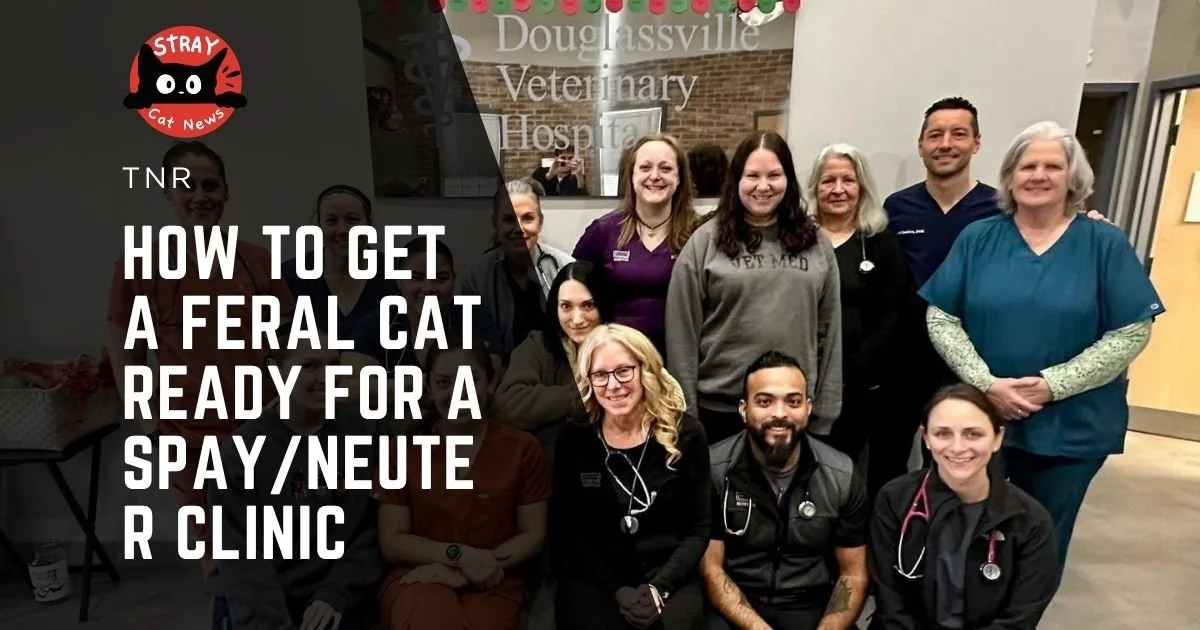
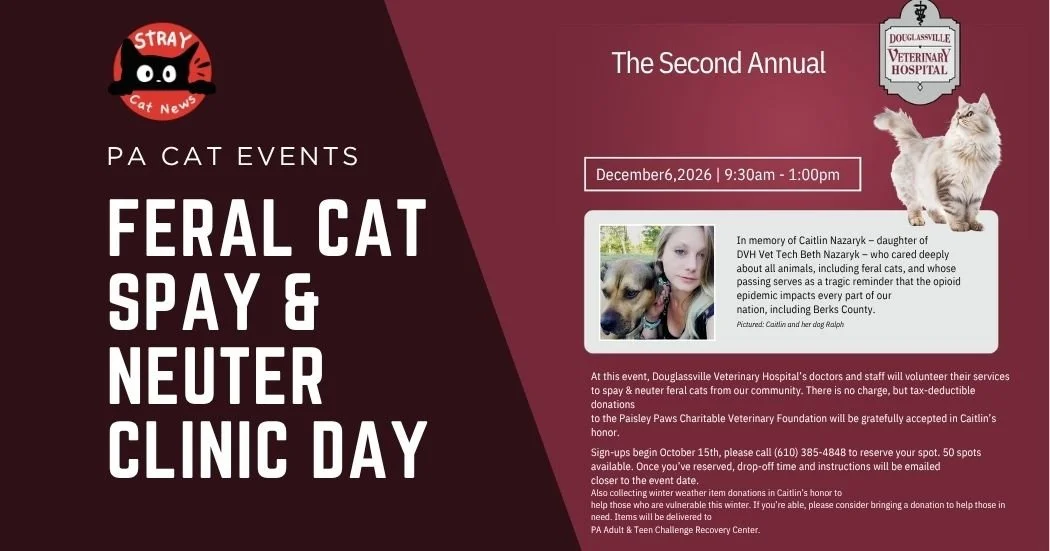
Our Hooman Ashley has been trapping with Berks Community Cats this fall, and on Sunday, December 6, she's volunteering at the free feral cat spay and neuter clinic at Douglassville Veterinary Hospital, held in memory of Caitlin Nazaryk. So this guide is basically her homework, written down for you.
Here's how to get a feral cat ready for a spay/neuter clinic, from the week before all the way to the moment you open the trap door back home.
One rule above everything else: the clinic's own instructions win. If anything here is different from what your clinic tells you, do what they say.
The Week Before: Get the Cat on a Schedule
The easiest trapping happens when the cat already knows when and where dinner shows up.
Feed at the same time and place every day. If the cat expects food at 6 PM by the porch, you know exactly when to set the trap.
Count your cats. Know how many cats you're feeding, what they look like, and which ones are already ear-tipped (a flat, straight cut on the tip of one ear means that cat is already fixed).
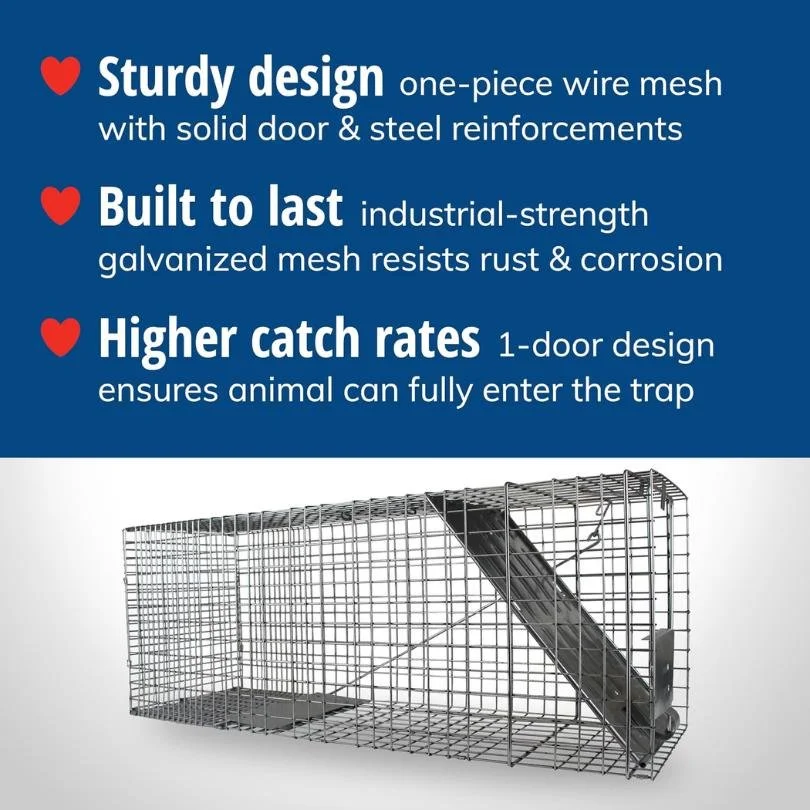
Borrow or buy a humane box trap. Many local rescues and TNR groups lend them out, sometimes with a small fee or donation. Get one per cat you plan to bring.
Set up your holding spot. You'll need a warm, quiet, dry place for the trap overnight, like a garage, basement, or spare bathroom. Lay down plastic or a tarp, then newspaper on top.
Save the clinic's phone number in your phone. You'll want it during recovery too.
Tucker would like to add that he was trapped once and it was "the best adventure of his life." Tucker also runs into the same wall every day, so please consider the source.
The Night Before: Trapping
For a morning clinic, trap the night before. Best Friends Animal Society notes that you want the cat in the trap for as little time as possible before surgery, so trapping the night before is usually the best approach.
Skip the regular meal that day. A hungry cat walks into a trap. A full cat naps next to it.
Bait the trap with something smelly, like a spoonful of tuna or wet food, at the very back, past the trip plate. Drizzle a little juice toward the entrance as a trail.
Cover the trap with a towel or sheet, leaving the entrance open. Cats feel safer walking into something dark.
Stay close but out of sight, and check often. Never leave a set trap overnight unattended.
Once the door closes, cover the whole trap right away. A covered trap calms a panicking cat fast.
Caught the neighbor's cat, an opossum, or a cat with an ear tip already? Just carry the trap back, open the door, and step away.
For a deeper walkthrough, read our guide on how to safely capture a stray cat.
Overnight: The Holding Rules
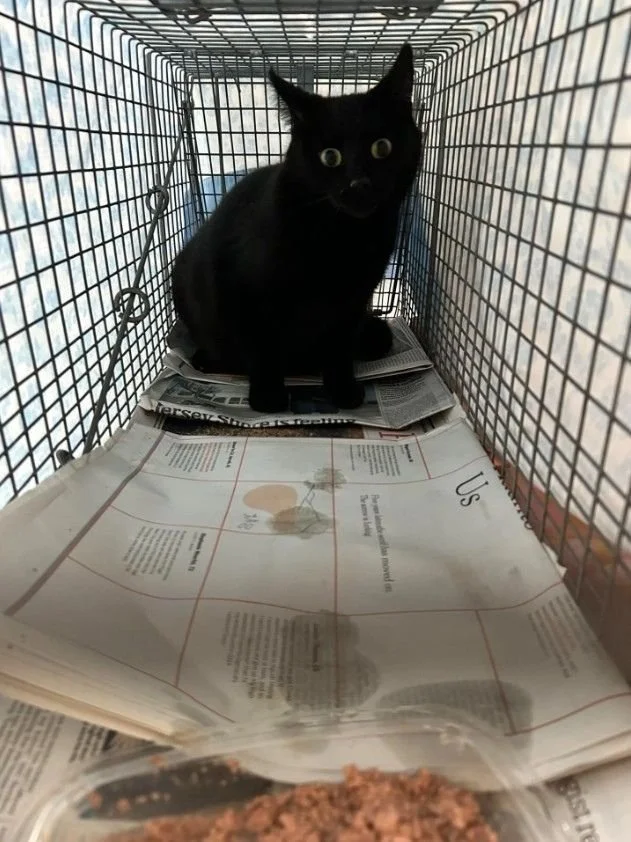
This part feels wrong, but it's right: leave the cat in the trap. Do not open it, do not move the cat to a carrier, and do not try to comfort them. An escaped feral cat in your garage is a much worse night for everyone.
Keep the trap covered the whole time.
Keep it warm and quiet. No dogs, no kids peeking, no TV. December in Berks County gets cold at night, so a car or an unheated shed is not a good spot.
No food after midnight. Best Friends advises that cats should not eat after midnight the night before surgery. Follow your clinic's exact fasting time if they give you one.
Prop the trap up on two blocks or bricks over your newspaper so it stays clean underneath.
Yebba would like it noted that she also hates being looked at while she's upset, and frankly so does every feral cat in Pennsylvania. Cover the trap and give them privacy.
Clinic Morning: Drop-Off
Most clinics give you a set drop-off window. At the Douglassville clinic, registered caretakers get drop-off times and instructions by email before the event.
Bring the cat in the covered trap. Most feral clinics take cats only in humane traps, because staff can sedate the cat without handling it awake.
Put a towel or puppy pad in your car under the trap. Nervous cats pee. It happens.
Write down any notes for the staff: where you trapped the cat, whether you think she's pregnant or nursing, or anything about her health.
Ask what services are included, like vaccines or an ear tip, and when to pick up.
An ear tip is a small, painless cut to the tip of one ear done while the cat is under anesthesia. It's the universal sign that a community cat has been fixed, so nobody traps her again by mistake.
Pickup and Recovery: The Next 24 to 48 Hours
When you get your cat back, she'll still be groggy. Recovery happens in the trap, back in that same warm, quiet spot.
How long to hold her
According to Alley Cat Allies, adult cats can usually be returned 12 to 24 hours after surgery, and some females need 48 hours. Many clinics recommend at least a full 24 hours. North Shore Animal League's recovery sheet says anesthesia takes a full day to leave the cat's body. If your clinic gives you a specific time, use theirs.
Food and water
Alley Cat Allies advises waiting eight hours after surgery before feeding adult cats. When you do feed, slide a small amount of wet food in carefully. If your trap has a divider, use it so the cat is never loose near an open door.
What to watch for
Vomiting while still asleep: Alley Cat Allies says to gently tip the trap no more than 30 degrees so she doesn't choke.
Bleeding that keeps going, swelling, or an open incision.
Not peeing: the ASPCA's post-surgery guide says to call if the cat isn't urinating or is straining within 72 hours.
Still wobbly, glassy-eyed, or unresponsive after a full day.
If anything looks off, call the clinic. Never give a cat human pain medicine. It can kill them.
Release Day: Bring Her Home

This is the "R" in TNR, and it's the best part.
Make sure they are ready. Fully awake, clear-eyed, and alert, not sleepy or wobbly.
Release them exactly where you trapped them. That's their territory, their food source, and their colony. Moving a feral cat somewhere new puts them in danger.
Pick a quiet time, like early morning or evening, when there are no cars or crowds.
Point the trap away from the road, open the door, and step back. They will probably bolt without a backward glance. That's normal. That's not ungratefulness. That's a feral cat being a feral cat.
Keep feeding them on their usual schedule. They may skip a day or two out of grudge. They’ll be back.
Then clean the trap with soap and water, return it, and give yourself a gold star. You just stopped dozens of future kittens from being born outside.
Quick Checklist
☐ Clinic spot reserved and drop-off instructions saved
☐ One humane trap per cat, plus towels or sheets to cover
☐ Warm, quiet holding spot with plastic and newspaper
☐ Smelly bait (tuna or wet food)
☐ No food after midnight (or your clinic's cutoff)
☐ Puppy pad or towel for the car
☐ Clinic phone number in your phone
☐ Plan for 24–48 hours of recovery before release
☐ Release spot = the exact place you trapped them
Why This Matters to Us
Last year, the first Douglassville clinic fixed 25 feral cats in one morning. Read the story of that day and the team behind it. This year there are 50 spots, and every one of them depends on a regular person willing to set a trap and drive a grumpy cat across the county.
If that's you, thank you. And if you're not ready to trap, you can still help by sharing this post, donating, or checking out Pennsylvania community cat programs near you.
See you December 6.
Keep reading: Find cat rescues, TNR and low-cost clinics in your PA county · How to Safely Trap a Stray Cat (Without Getting Hurt) · Douglassville Feral Cat TNR Clinic: A Daughter's Legacy · What Is TNR? Trap-Neuter-Return for Cats, Explained
This guide is general information from a cat rescue volunteer, not veterinary advice. Always follow the instructions from your spay/neuter clinic and call them with any concerns.