
Published On: 3/4/2026
Last Updated On: 3/4/2026
By Callie, Seymour, Yebba, and Mama and our Hooman Ashley!
FREE CAT HAIR HACKS
⬇️
FREE CAT HAIR HACKS ⬇️
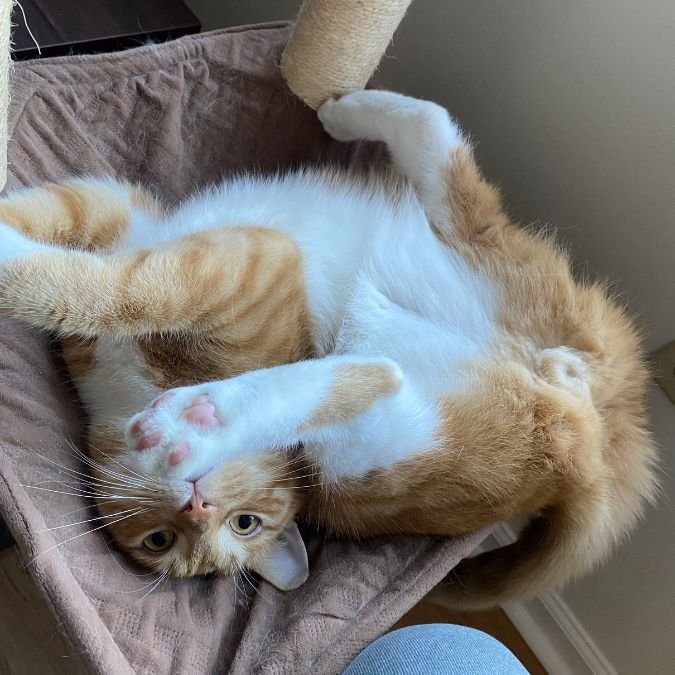
The window is cracked.
The breeze smells like thawed soil and somewhere, faintly, grilled chicken.
Birds are arguing in the maple tree.
And we cats are sitting very still.
Tail wrapped. Ears angled. Eyes half-soft.
You look at us and say,
“Aww, they’re relaxed.”
Maybe.
Or maybe we’re calculating.
Welcome to understanding cat body language — a skill every cat parent (and every hooman who just found a stray cat) should have in their back pocket.
Because we are always talking.
You just have to learn the dialect.
Why Understanding Cat Body Language Matters
Let’s say you just brought home a stray cat.
You reach out.
We freeze.
You think we’re calm.
We think you’re bold.
Misreading signals is how trust breaks before it even forms.
Learning basic cat communication signals helps you:
Build trust faster
Avoid bites and scratches
Know when we’re scared vs. curious
Help a stray cat feel safe
Strengthen your bond
It’s not about controlling us.
It’s about respecting the conversation.
Our Quick-Read Checklist for Feline Communication
When practicing understanding cat body language, here’s what to watch:
✔ Tail position
✔ Ear direction
✔ Eye shape
✔ Whisker position
✔ Body posture
✔ Vocal tone
We don’t rely on one signal.
It’s a full-body headline.
Now let’s decode the big ones.
The Tail: Our Emotional Flag
Straight up, slight curve at tip?
Confidence. Friendly greeting. We might even allow chin scratches.
Puffed and bottle-brush dramatic?
Fear. Startle response. Please do not test this mood.
Low and tucked?
Anxiety. Especially common with a newly found stray cat adjusting to indoors.
Honest note: Some cats naturally carry their tail lower. Context matters.
The Ears: Our Radar System
Forward-facing ears
Curious. Engaged. Processing.
Sideways (“airplane ears”)
Overstimulated. Irritated. About to file a complaint.
Flattened back
Defensive. Afraid. This is not cuddle hour.
Limitation: Quick ear flicks can just mean we heard something interesting — not that we’re upset.
The Eyes: The Slow Blink Treaty
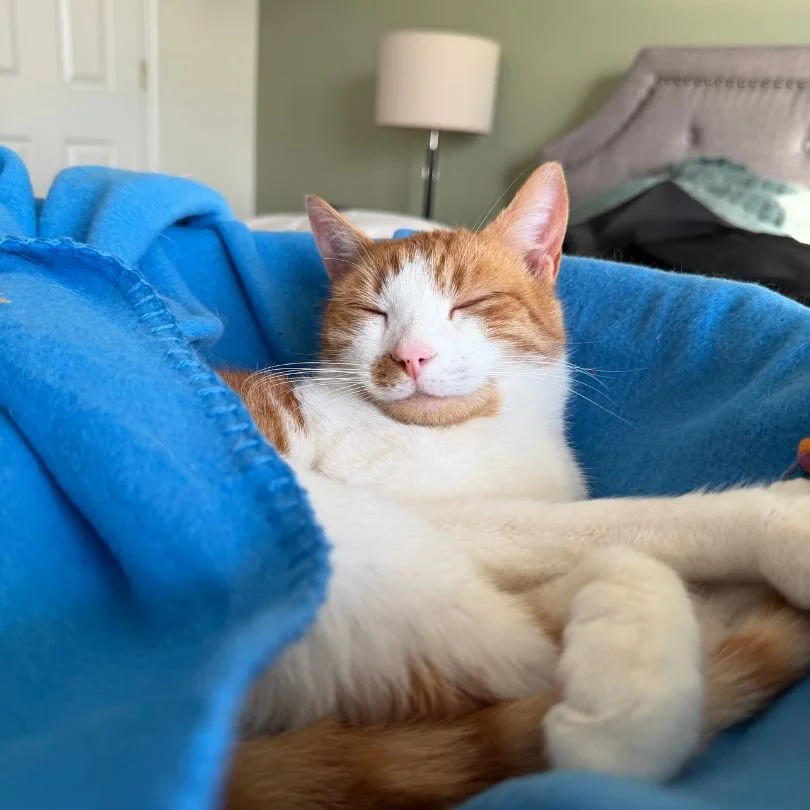
Soft eyes. Half-closed lids. Slow blink.
That’s love.
That’s trust.
That’s us saying, “You’re safe.”
Try it back. Slow blink. Look slightly away.
For someone learning how to read a stray cat’s behavior, this is one of the most powerful bonding tools you have.
Wide pupils + tense body, however?
Fear or overstimulation.
Different headline entirely.
The Body Posture
Curved body. Loaf position. Relaxed paws tucked.
We feel secure.
Arched back, fur up?
Fear. Defensive reaction. We’re trying to look bigger.
Low crouch, weight shifted backward?
We are deciding whether to flee.
If you found a stray cat and they’re crouched low under furniture, they’re not “being dramatic.”
They’re surviving.
Give space. Offer food. Move slowly.
The Voice: Yes, It Matters
Short chirps?
We’re talking to you.
Long, low growl?
We’re not.
High-pitched, repetitive meowing from a new stray cat?
Stress. Confusion. Seeking orientation.
Tone always pairs with body signals.
Never isolate one cue.
How to Respond (Especially if You Found a Stray Cat)

When learning understanding cat body language, here’s your golden rule:
Respond to the calm. Ignore the drama.
• Sit low instead of looming
• Offer your hand, don’t grab
• Let us approach first
• Reward relaxed signals
• Never force touch
Trust builds in layers.
Especially for cats who have lived outdoors.
Final Thoughts From the Windowsill
We know hoomans mean well.
But many misunderstandings between cats and people come down to one thing:
You weren’t fluent yet.
Understanding cat body language isn’t about becoming an expert overnight.
It’s about noticing.
Pausing.
Respecting the signals.
If you recently welcomed a stray cat into your home, or you’re deepening your bond with your longtime companion, start watching the tail. The ears. The eyes.
We are speaking.
Learn the language.
And if this guide helped, share it with another cat parent. Tag Stray Cat News. Support rescue efforts in your community.
Because better communication means safer cats.
And safer cats mean stronger communities.