
Stress & Anxiety in Cats: Signs, Causes, What Helps
Published On: 3/9/2026
Last Updated On: 3/9/2026
By Callie, Seymour, Yebba, Tucker, and Mama and our Hooman Ashley!
FREE CAT HAIR HACKS
⬇️
FREE CAT HAIR HACKS ⬇️

We would like to clear something up.
We are not “moody.”
We are environmentally responsive.
And when it comes to stress & anxiety in cats, that distinction matters.
Because cats rarely “act out.”
We communicate.
Quietly. Subtly. Sometimes by peeing directly next to the litter box while maintaining eye contact.
Let’s discuss.
What Stress & Anxiety in Cats Actually Looks Like

When people search “cat anxiety symptoms,” they often expect dramatic behavior.
But feline stress is rarely theatrical.
It looks like:
• Hiding more than usual
• Overgrooming (hello, bald patch)
• Skipping meals
• Digestive upset
• Litter box changes
• Sudden aggression or withdrawal
It can even look like… nothing obvious. Just tension. Hyper-alertness. Tight body posture.
We notice everything.
The suitcase.
The new couch.
The neighbor’s dog barking two houses down.
Our nervous systems are finely tuned.
Common Causes of Feline Behavior Changes
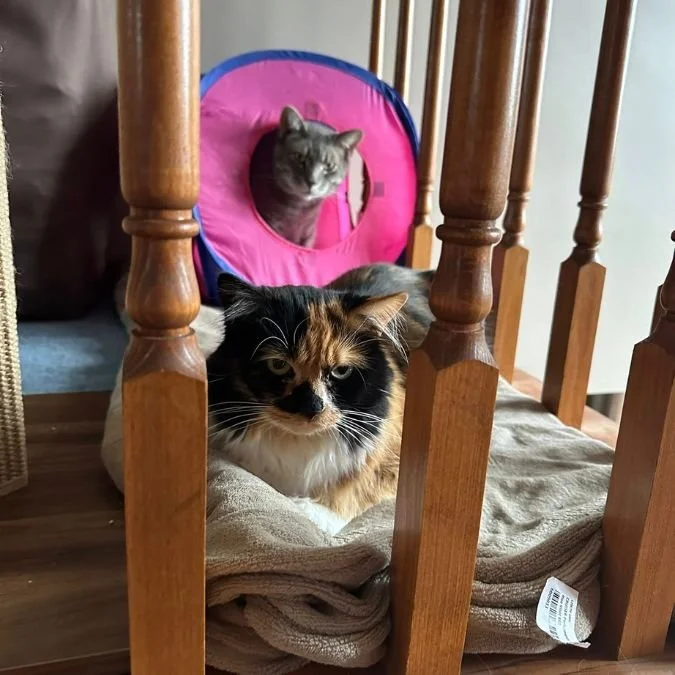
When we investigate stress & anxiety in cats, the usual suspects include:
• Moving homes
• New pets
• Renovations
• Changes in routine
• Loss of a companion
• Medical discomfort
Sometimes it’s emotional. Sometimes it’s physical.
This is why we always say: before Googling “how to calm a stressed cat,” rule out medical causes with a veterinarian.
Pain looks like anxiety.
And anxiety deserves compassion.
Environment First. Always.

Here’s our newsroom headline:
Calm cannot be purchased.
It can be supported. But it cannot be shortcut.
True stress relief begins with:
• Clean, accessible litter boxes
• Vertical safe spaces (we prefer high vantage points)
• Predictable feeding times
• Gentle introductions
• Quiet retreat zones
We’ve seen this in rescues. We’ve seen this in ARLs. We’ve seen it in cat cafés in Pennsylvania where formerly stressed cats soften once given space and safety.
Environment changes behavior.
Every time.
Why Education Matters
At Stray Cat News, our mission is to uplift cat parents and strengthen the cat community — from ARLs to rescue partners to everyday homes.
When cat parents understand feline behavior changes, they respond differently.
They stop punishing.
They start observing.
They ask better questions.
And that’s how trust is built.
What About Products?

We’ll be covering calming supplements and support tools in our next post — responsibly, realistically, and without hype.
Some can help.
None replace safety.
If you’re navigating stress & anxiety in cats, start with:
A vet check
Environmental adjustments
Patience
Calm is not instant.
It’s layered.
And we, as professional observers of human behavior, can tell you this:
The most powerful calming agent in any home is a regulated human.
You set the tone.
We feel it.
If this sounds familiar — if your cat has been hiding more, grooming obsessively, or acting “different” — you are not alone.
Stress is information.
Listen to it.
We’ll walk you through what helps next.