
Published On: 7/15/2026
Last Updated On: 7/15/2026
By Callie, Seymour, Yebba, Tucker, and Mama and our Hooman Ashley!
PENNSYLVANIA — The Fourth of July is over. Your cat might not have gotten the memo.
Every year right about now, my inbox fills with the same worry: the fireworks stopped days ago, but the cat is still hiding, still jumpy, still not quite eating.
And a Pennsylvania summer isn't done throwing stressors, either. Thunderstorm season runs straight through August — and in a lot of neighborhoods, the backyard fireworks don't magically stop on July 5th.
So people go looking for a DIY cat calming spray.
It's a good instinct. A homemade spray is cheap, it's fast, and it feels natural.
But here's the part almost nobody on the first page of Google will tell you.
Most of the "natural" DIY cat calming spray recipes online are built on ingredients that are toxic to cats.
Not "might irritate." Toxic.
So let's do this the right way. I'll show you a genuinely safe homemade spray you can make tonight — and I'll be honest about the popular one you should skip.
What does a cat calming spray actually do?
A calming spray doesn't sedate your cat. Nothing you spray on a blanket is going to knock out a terrified animal during a thunderstorm.
What a good one does is quieter than that. It layers a familiar, safe-feeling scent into the places your cat already loves — the bed, the carrier, the cat tree — so those spots read as "I'm okay here."
That's the whole game. Comfort by association.
The store-bought versions usually do this one of two ways: with synthetic cat pheromones (odorless to us) or with catnip. The homemade versions online try to do it with essential oils.
And that's where it goes wrong.
Is DIY cat calming spray safe?
Most DIY cat calming sprays are not safe as written online — because the lavender and chamomile essential oils in nearly every popular recipe are toxic to cats. Cats lack a key liver enzyme needed to break these oils down, so they can build up and cause harm. A truly safe homemade spray skips essential oils entirely and uses cooled catnip "tea" or your cat's own facial pheromones instead.
That's the short version. Now the important part — why.
The essential oils you should NEVER put in a cat calming spray
Here's the biology in one sentence.
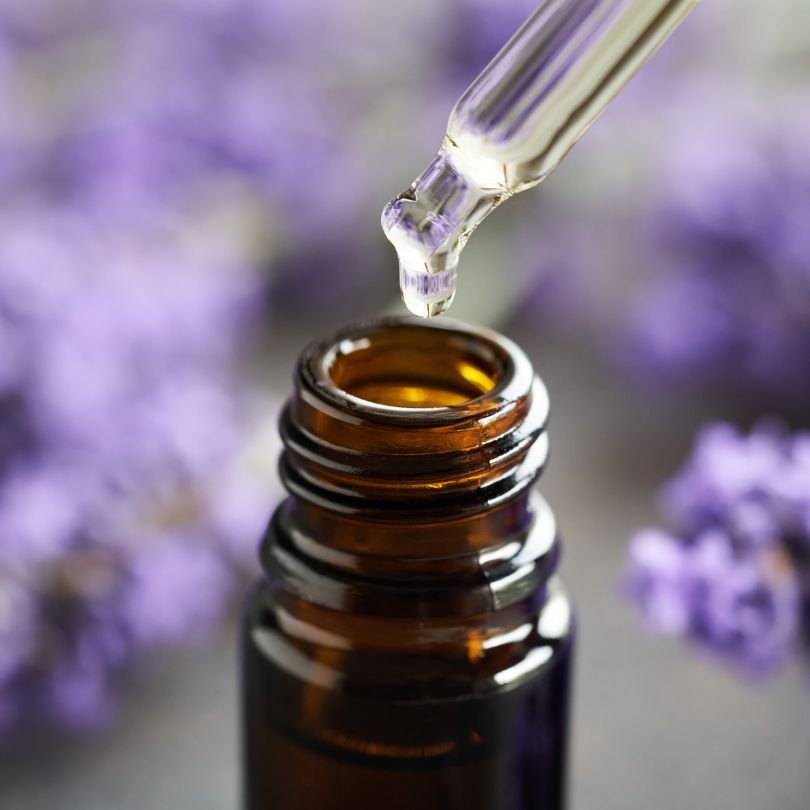
Cats are missing an enzyme (glucuronyl transferase) that humans and dogs use to process the compounds in essential oils — so phenols and terpenes that we clear easily can accumulate in a cat and damage the liver and nervous system.
That's not a fringe opinion. It's the position of the veterinary establishment.
VCA Animal Hospitals lists oils that are poisonous to cats — including cinnamon, citrus, pennyroyal, peppermint, pine, sweet birch, tea tree (melaleuca), wintergreen, and ylang-ylang — and warns that both swallowing and skin contact can be toxic. Their line that stuck with me: only a few licks, or a small amount on the skin, can be harmful.
And your cat grooms. Anything you mist on their fur, they will lick off.
It gets worse for the two ingredients those DIY recipes love most.
Lavender — despite being in nearly every "safe cat calming spray" recipe, veterinary toxicologists classify it as mild-to-moderately toxic to cats. It is not a safe base.
Tea tree oil — Hill's Pet, citing Tufts, is blunt: it's never safe for cats. And more broadly, there simply aren't any essential oils that are reliably safe to use on a cat.
The ASPCA agrees that concentrated oils are a real danger to pets — made worse in cats because they groom the oils right off their coat and swallow them.
Signs of essential-oil poisoning in cats to watch for:
Drooling, watery eyes, or squinting
Vomiting or diarrhea
Tremors, wobbliness, or trouble breathing
Low body temperature, lethargy, or collapse
If you think your cat got into essential oils, don't wait for symptoms. Call your vet, the ASPCA Animal Poison Control Center (888-426-4435), or the Pet Poison Helpline (855-764-7661). Both charge a consult fee and both are worth it.
Okay. Deep breath. Now let's make something that actually is safe.
A safe DIY cat calming spray recipe (no essential oils)
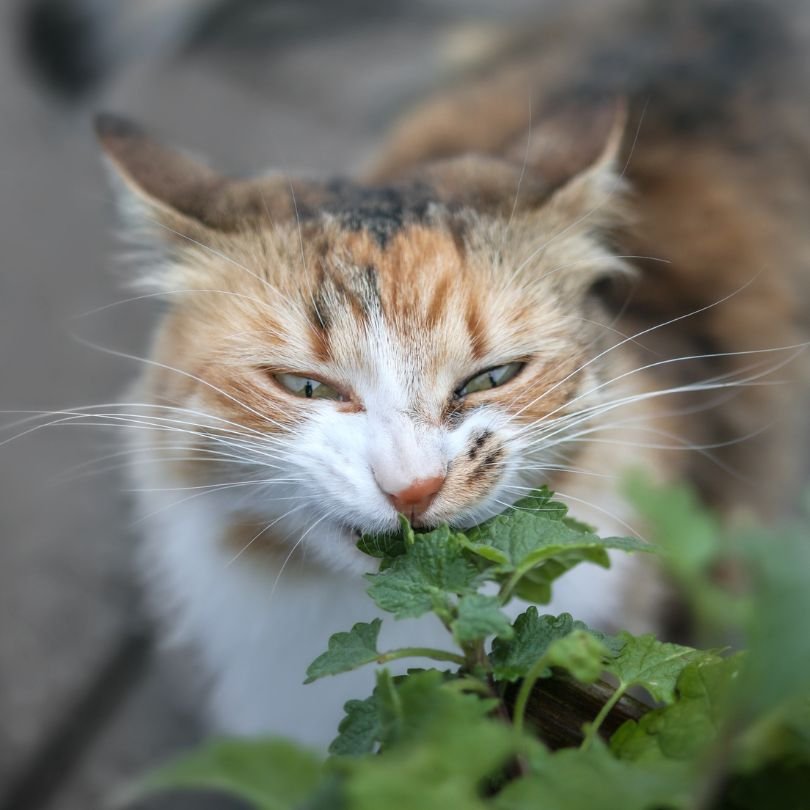
This is a simple catnip mist. Catnip is non-toxic to cats, most cats have a positive response to it, and steeped in water it makes a gentle, safe spray for bedding and toys.
You'll need:
2–3 tablespoons of dried catnip (or dried silver vine / matatabi — more on that below)
1 cup of just-boiled water
A fine strainer or coffee filter
A clean glass spray bottle (oils and old residue cling to plastic)
Steps:
Steep the catnip in the hot water, covered, for about 15 minutes — like a strong tea.
Let it cool completely.
Strain it well, twice if you need to, so there's no floating debris.
Pour into your glass bottle. Store it in the fridge and use it within about a week — no preservatives means it won't keep.
Lightly mist the bedding, carrier, scratcher, or a favorite blanket. Not your cat's face. Let it dry before they climb on.
One honest caveat, because you won't get this from the affiliate blogs: catnip is enrichment, not a tranquilizer. For a lot of cats it's a little burst of happy-goofy energy first, then a mellow. It's fantastic for building a good association with the carrier before a trip, or for redirecting a bored, wound-up cat. It is not going to calm a genuinely panicked cat mid-thunderstorm.
And roughly a third of cats don't react to catnip at all. If yours is one of them, swap in silver vine — studies suggest even more cats respond to it than to catnip. It's sold as sticks, powder, and gall fruits at most pet stores.
The free "DIY Feliway" trick most people miss
Want the closest thing to a real homemade calming pheromone? You already have the ingredient. It's on your cat's face.
When your cat rubs their cheeks on the couch corner, they're depositing facial pheromones that say this is mine, this is safe. You can move that scent where you need it.
Take a soft cloth. Gently rub it along your cat's cheeks when they're relaxed and in the mood to be petted. Then tuck that cloth into the carrier before a vet trip, or into their bed before company comes over.
No cost. No risk. Your cat's own "I'm safe here" signal, ported to a stressful spot.
It's my favorite trick, and it's the one the recipe listicles never mention.
When homemade isn't enough — the store option worth it
Sometimes the stress is bigger than a catnip mist can handle. A move. A new baby. A cat who genuinely panics.
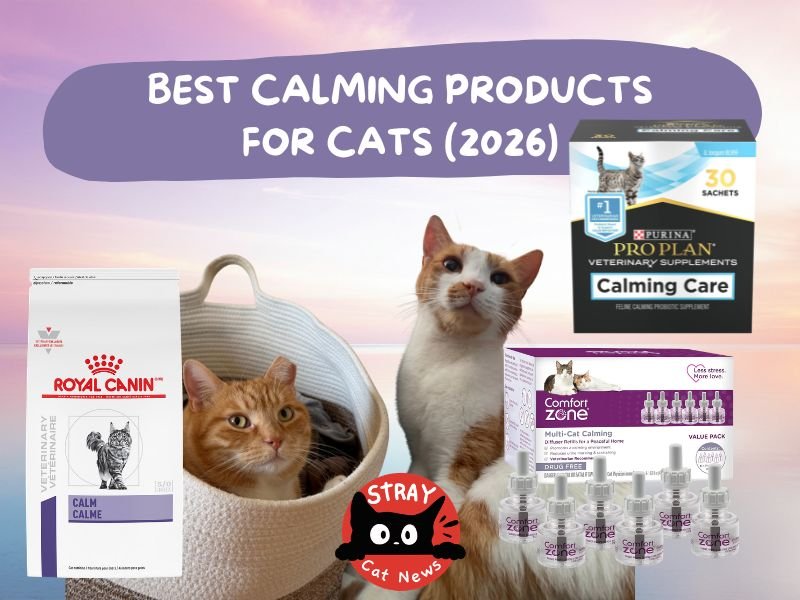
For that, the vet-world standard is a synthetic feline pheromone spray — Feliway is the best-known — which copies the calming facial pheromone in a lab-made, essential-oil-free formula that's odorless to you. It's meant for surfaces (spritz the carrier or bedding, let it dry, don't spray it on your cat), and it's drug-free and safe around kittens.
I'll be straight with you: the research is genuinely mixed, and some of the supporting studies were funded by the maker. It's not magic and it doesn't work for every cat. But it's safe to try, and for a lot of nervous cats it takes the edge off — which is more than I can say for a lavender spray that could hurt them.
We keep an honest, hands-on rundown in our guide to the store-bought calming sprays we trust and our broader look at calming aids for stressed cats.
When to use a cat calming spray — a Pennsylvania summer guide
Timing matters more than the spray itself. Get the familiar scent in place before the stressor, not during.
Here's the PA summer we're actually in right now:
The post-Fourth hangover. Fireworks stress doesn't always end when the booms do — plenty of cats stay rattled for days afterward. If yours is still off this week, you're not imagining it. Scent their safe spots and give them time.
Thunderstorm season — the big current one. It runs all the way through August, and cats often feel the pressure drop before you hear the first rumble. Get ahead of the forecast.
Backyard fireworks all summer. In a lot of PA neighborhoods, the random weekend booms keep going well past July 4th. Keep a scented blanket and a dark hiding spot ready.
Summer moves. July and August are peak moving season — new house, all-new smells. Give your cat one blanket that still smells like them.
Vet trips. Scent the carrier the night before, not five minutes before.
Looking ahead to fall. When everyone gets cooped up indoors again, tension climbs — pair the spray with real enrichment.
And whatever the season, learn to read the early signs — hiding, over-grooming, a swishing tail, litter-box changes. Our cat body-language guide walks through what stress actually looks like before it becomes a problem.
One more note for the kitten people: kittens and very young cats are even more sensitive to any of this, so be extra cautious — see our Pennsylvania kitten-season guide.
When a spray isn't the answer
If your cat's stress shows up as sudden litter-box trouble, hiding for days, appetite changes, or over-grooming to bald spots — that's a vet visit, not a spray.
Those can be medical, not just emotional. A calming mist is a comfort tool. It is not a substitute for a checkup when something changes suddenly.
FAQ

Is lavender safe for cats?
No. Even though it's in most DIY calming-spray recipes online, veterinary toxicologists classify lavender as mild-to-moderately toxic to cats. Lavender essential oil especially — skip it.
Can I use any essential oils in a cat calming spray?
The safest answer is none. Cats can't properly process the compounds in essential oils, and they groom whatever you spray on them right off their fur. Tea tree, citrus, peppermint, pine, cinnamon, and ylang-ylang are especially dangerous.
Does catnip calm cats down or make them hyper?
Both, in order. Many cats get a short burst of playful energy, then settle into a mellow state. It's better for building good associations and easing boredom than for stopping acute panic — and about a third of cats don't respond at all.
How often can I use a homemade calming spray?
A catnip mist is gentle enough for regular use on bedding and toys — just refrigerate it and make a fresh batch weekly. Watch your cat's reaction and ease off if they seem overstimulated or avoid the spot.
What actually calms an anxious cat down the fastest?
Environment beats any spray: a quiet, dark hiding spot, a familiar-smelling blanket, routine, and vertical space to retreat to. For bigger stress, a synthetic pheromone spray or a conversation with your vet does more than any essential oil ever could.
Here's what I want you to take from this.
You went looking for a DIY cat calming spray because you love your cat and you wanted to help. That instinct is exactly right.
The internet just pointed you at the wrong bottle.
Skip the lavender. Steep the catnip. Rub the cloth on those sweet cheeks. And keep the poison-control number in your phone, because caring for a cat is mostly a hundred small, safe choices in a row.
Your cat doesn't need a fancy recipe. They need to feel safe.
And that — you can absolutely give them. 🐾