
Published On: 7/17/2026
Last Updated On: 7/17/2026
By Callie, Seymour, Yebba, Tucker, and Mama and our Hooman Ashley!
PENNSYLVANIA — A foster parent asked me this exact question last month after a neighbor told her she'd "get a fine" for not licensing her foster cat. She panicked a little. So did I, honestly, until I actually pulled the statute.
Short answer: no. Pennsylvania does not require cats to be licensed statewide. That neighbor was thinking of dogs.
Here's the part almost nobody explains clearly, though — there IS a real, enforceable state law about cats, and it's not licensing. It's rabies vaccination, and skipping it actually can cost you money. Let's untangle what's a myth, what's real, and where a couple of PA towns quietly do things differently.
No. Pennsylvania's Dog Law (3 P.S. Sections 459-101-459-1205, detailed in 7 Pa. Code Chapter 21) sets up the state's entire pet-licensing system — and it applies only to dogs.[1][2] There is no parallel statewide cat-licensing law. The City of Pittsburgh's own official pet-owner page confirms this plainly: "Cats do not have to be licensed."[3] A few sites out there will tell you every PA cat needs a license — that's simply wrong at the state level.
The law that actually DOES apply to your cat: rabies vaccination
This is the one that trips people up, because it gets confused with "licensing" but it's a completely different, real requirement. Under 7 Pa. Code Section 16.41 (part of the Rabies Prevention and Control in Domestic Animals and Wildlife Act), every cat over three months old in Pennsylvania must be currently vaccinated against rabies, administered by or under a licensed veterinarian.[4][5]
A few things worth knowing:
You must be able to produce proof of vaccination within 48 hours if a police officer, state dog warden, or municipal animal control officer asks.
Skipping it is a summary offense with a fine of up to $300 per violation, and each day without valid vaccination can count as a separate offense.[6]
This is the requirement with real teeth in Pennsylvania — not licensing.
So if you've been assuming "no license" means "no rules at all," that's the gap. Keep the rabies certificate somewhere you can actually find it.
Wait — do ANY Pennsylvania towns require cat licenses?
A small number, yes — this is purely local, not statewide, and it's worth checking your own municipality's website directly since these ordinances are easy to miss:
Weatherly Borough (Carbon County) has required cat licenses since 2020 — $5 for an unaltered cat, $3 for a spayed/neutered one, renewed every January.[7]
Harrisburg appears to have a cat-licensing ordinance on the books (City Code, Ord. No. 11-1992) with a similar $5/$3 fee structure. [CONFIRM: we could not directly verify this is still in force - check ecode360.com or call the city before treating this as current.]
Pittsburgh does not require cat licenses, despite some outdated sites claiming otherwise — confirmed directly on the city's own site.[3]
If your township or borough has a local ordinance, it overrides the "no statewide requirement" default — check your municipal website or call the borough office to be sure, especially before a move.
What about community cats, colonies, and TNR?
If you're a caretaker for an outdoor colony, none of this licensing confusion applies to you in the way it does to an owned pet — community cats aren't "owned" in the legal sense that licensing or registration schemes are built around. Some municipalities do have their own rules for registered colony caretakers, so if you're doing organized TNR, it's worth a quick call to your local animal control to ask about any local caretaker-registration program before you start.
What we'd actually recommend, license or not
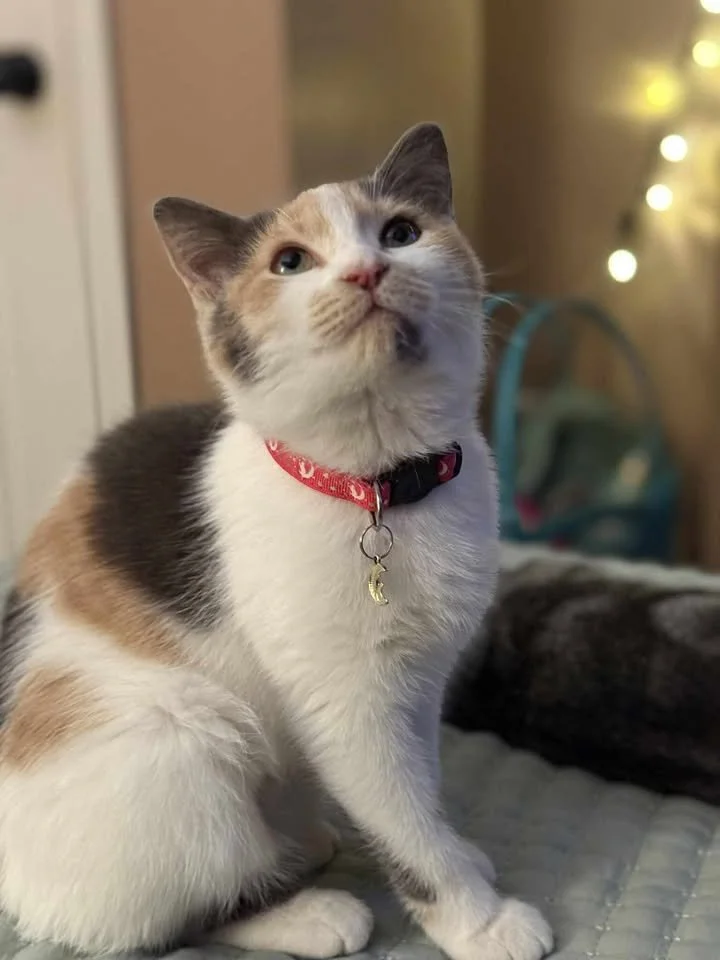
Keep a collar and ID tag on any cat who goes outdoors, even briefly.
Microchip your cat. It's not legally required anywhere in PA that we could confirm, but it's the single best way to get a lost cat home, license or no license.
Keep your rabies certificate somewhere you can find in under 48 hours — a kitchen drawer or your phone's photo album both work.
Check your own municipality's website if you're not sure — "license" laws are local-only and easy to miss.
Our take
The neighbor who scared my foster mom friend wasn't malicious, just misinformed — this myth is everywhere. The real rule that matters is the rabies one, and it's the one worth actually keeping paperwork for. Everything else is a local exception, not a statewide rule.
Want the full picture — leash laws, at-large ordinances, how many cats you can legally own, and more? Read our complete Pennsylvania Cat Laws & Pet Ordinances Guide next.
FAQ
Do cats need a license in Pennsylvania?
No, not under state law — Pennsylvania's Dog Law only requires licensing for dogs. A small number of individual municipalities (like Weatherly Borough) have their own local cat-licensing ordinances, so check your town's rules too.
Is it illegal to not vaccinate your cat in PA?
Yes. State law (7 Pa. Code Section 16.41) requires cats over three months old to be currently vaccinated against rabies. Violating it is a summary offense with a fine of up to $300.
Do I need to register my cat in PA?
Not at the state level. Some municipalities have local registration or licensing rules — check your borough or township's website to be sure.
Does Pittsburgh require a cat license?
No — the City of Pittsburgh's own website confirms cats do not need to be licensed there.
What happens if my cat doesn't have a license?
At the state level, nothing — there's no statewide cat license requirement to violate. If your specific municipality has a local ordinance, check with them directly for their penalty, if any. The real financial risk is skipping the rabies vaccination, which carries a fine of up to $300.