
Pennsylvania Cat Laws & Pet Ordinances: What Cat Parents Must Know
Published On: 1/6/2026
Last Updated On: 1/6/2026
By Callie, Seymour, Yebba, and Mama and our Hooman Ashley!
FREE CAT HAIR HACKS
⬇️
FREE CAT HAIR HACKS ⬇️
We’ve overheard a lot of conversations from under porches, behind dumpsters, and beneath kitchen tables.
“He’s not my cat.”
“I didn’t know that was illegal.”
“The borough told me to stop feeding them.”
“They said I had to remove her.”
And every time, we blink slowly at each other and think the same thing:
If the rules were clearer, fewer cats would be in trouble.
So today, we’re doing what we do best here at Stray Cat News — breaking things down in plain language, with warmth, context, and the lived experience of cats who’ve survived confusion, contradictions, and a whole lot of ordinances written without us in mind.
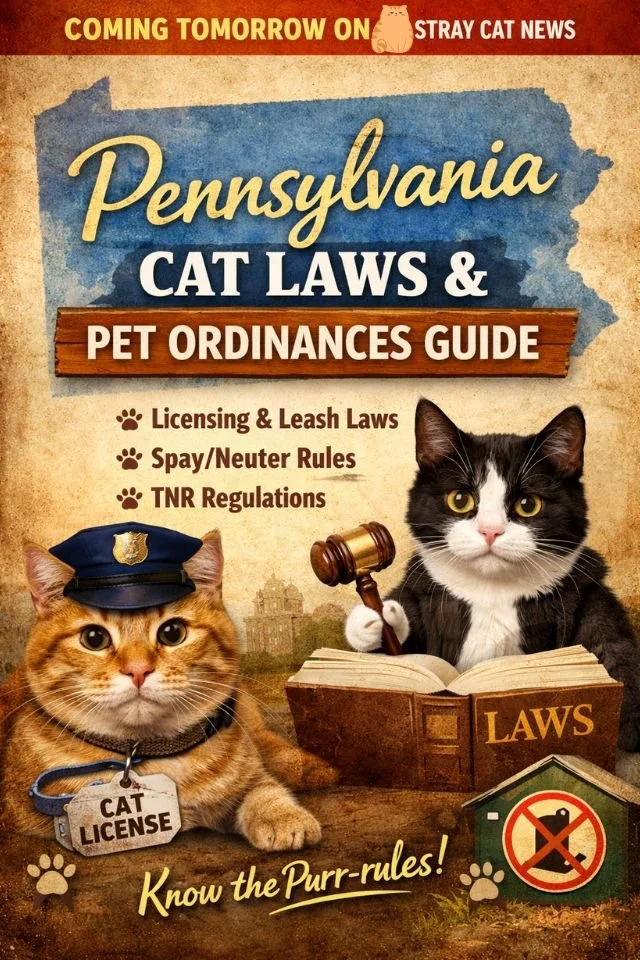
This is your Pennsylvania Cat Laws & Pet Ordinances Guide, told from the paws of cats who know how inconsistent the rules can be — and how important it is for caregivers, adopters, and feeders to understand them.
Why Pennsylvania Cat Laws Feel So Confusing
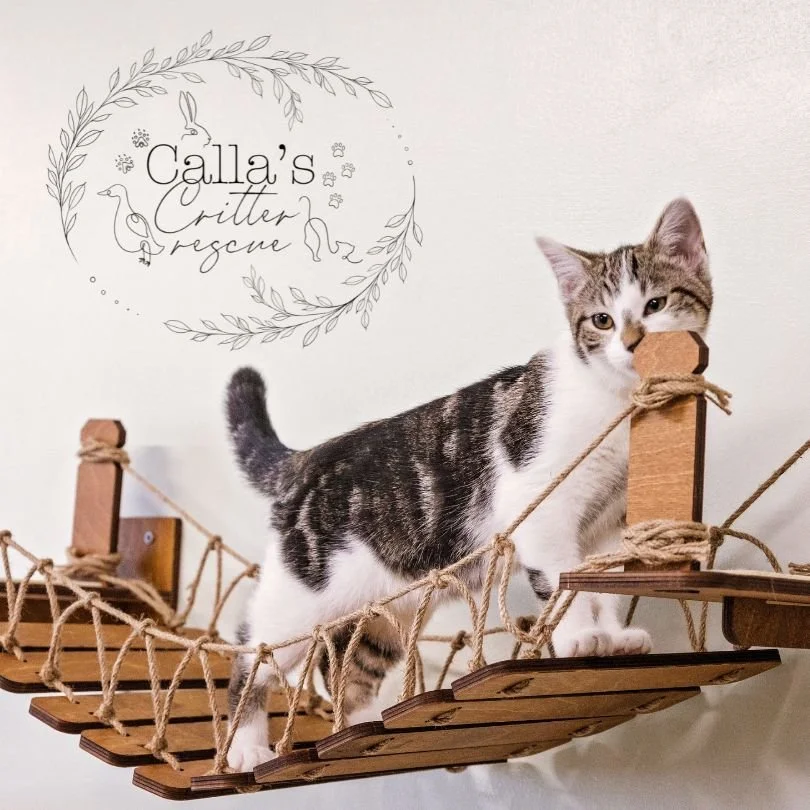
Rescued kitten walks confidently along elevated wooden cat shelving at Calla’s Critter Rescue
Photo credit: Ceara Rahne Photography, LLC
Here’s the thing about Pennsylvania cat laws:
There isn’t one clear rulebook.
Some laws are statewide.
Some are county-based.
Many are decided town by town, borough by borough, sometimes block by block.
We’ve crossed invisible lines where feeding us was encouraged…
…and then suddenly prohibited.
So if you’ve ever felt unsure, stressed, or worried you might be doing the wrong thing — we see you. The system isn’t designed to be intuitive.
That’s why we’re laying it all out.
Pennsylvania Cat Licensing Laws: Do Cats Need to Be Licensed?
Short answer: No — not statewide.
Unlike dogs, Pennsylvania does not have a universal statewide cat licensing requirement.
But (and this is a big “but”):
Local Municipalities Can Require Cat Licensing
Some cities, towns, or boroughs do require cats to be licensed or registered locally.
That means:
Indoor cats may be exempt
Outdoor or roaming cats may require registration
Fees and enforcement vary widely
We’ve seen caregivers fined not because they were neglectful — but because no one told them their town had its own rulebook.
Our advice:
Always check your local municipal code, not just state law.
Local Leash Laws & Community Cat Rules: The Gray Zone
Ah yes. The leash law conversation.
We’ve sat through many of those.
Are Cats Required to Be on a Leash in Pennsylvania?
At the state level — no.
At the local level — sometimes.
Some municipalities lump cats into “animals at large” ordinances, which can mean:
Cats roaming freely may be considered a violation
Feeding outdoor cats may be regulated
Caregivers may be told to “remove” cats (even when removal isn’t realistic or humane)
Here’s what’s important to know:
🐾 Community cats are not abandoned pets
🐾 They are recognized under best-practice animal welfare standards
🐾 Many towns misunderstand this distinction
This is where education — and TNR — becomes critical.
Spay & Neuter Laws in Pennsylvania: What’s Required?
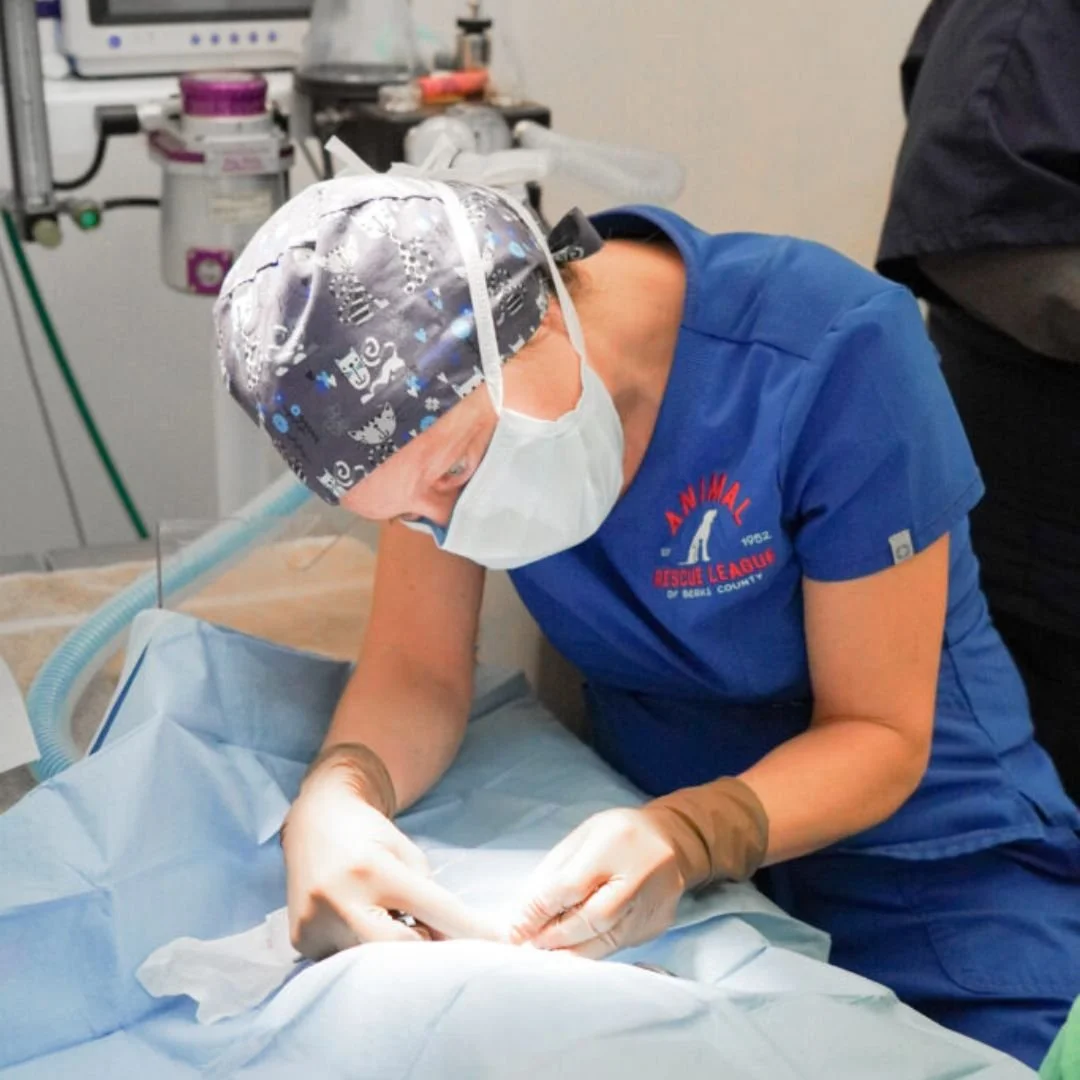
Pennsylvania does not mandate spay/neuter for all cats statewide.
However:
Shelters and rescues are often required to alter cats before adoption
Some municipalities require spay/neuter for owned cats
Breeding may be regulated locally
From our side of the fence, we can tell you this:
Unaltered cats don’t choose chaos — it just happens to us.
Spay and neuter reduce:
Fighting
Roaming
Disease
Kitten overpopulation
And while the law doesn’t always require it, responsible care always does.
Trap-Neuter-Return (TNR) Regulations in Pennsylvania
This is the section we wish everyone would read twice.
Is TNR Legal in Pennsylvania?
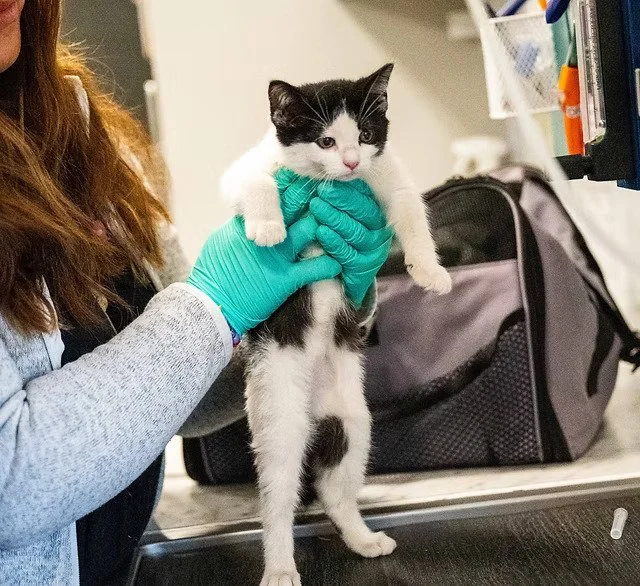
Yes — TNR is legal in Pennsylvania, but it is not uniformly protected statewide.
That means:
Some municipalities support it
Some tolerate it
Some actively misunderstand or oppose it
There is no Pennsylvania state law that bans TNR.
However, enforcement often comes down to:
Local ordinances
Animal control interpretation
Whether officials understand community cat management
We’ve seen TNR colonies thrive peacefully — and we’ve seen caregivers threatened simply for helping.
What Caregivers, Feeders & Adopters Actually Need to Know
Here’s the practical part — the stuff we wish humans were handed on day one.
If You Feed Outdoor Cats
You may be considered a “caretaker” locally
That can come with responsibility — or scrutiny
Document your efforts (especially TNR)
If You TNR
Keep records of surgeries and vaccinations
Eartipping is your legal ally — it signals a managed cat
Be calm, informed, and firm if questioned
Why These Laws Matter More Than People Think

When rules are unclear:
Cats are displaced
Caregivers burn out
Rescues overflow
Kittens are born into danger
We’ve lived the outcome of confusion.
We’ve also lived the relief that comes when one informed human says,
“Actually, here’s what the law says.”
That moment?
That changes everything.
How to Protect Cats While Navigating Local Ordinances
We recommend:
Reading your municipal code (yes, really)
Connecting with local rescues or TNR groups
Advocating calmly, with facts
Leading with education, not confrontation
Cats shouldn’t suffer because laws are inconsistent.
Caregivers deserve clarity.
Doing the right thing shouldn’t feel risky.
We’re not lawyers.
We’re cats who survived thanks to people who didn’t give up — even when the rules were messy.
And if this guide helps one person help one cat more confidently?
That’s a headline we’ll happily run again.
🐾 Coming tomorrow on Stray Cat News
How to Prepare Your Home for a Rescue Cat (Room by Room)
Because new beginnings deserve safe landings.
Before the carrier opens.
Before the first cautious step onto your floor.
Before we decide whether this place feels like home.
Tomorrow, we’re walking you room by room through how to prepare your home for a rescue cat — from the paws of cats who remember what it felt like to arrive somewhere new, unsure, and quietly hopeful.
This guide covers:
🐾 A realistic kitten-proofing checklist (no panic, just priorities)
🐾 Creating quiet zones & enrichment spaces that build trust
🐾 Safe outdoor enclosure tips for curious noses and brave hearts
🐾 What actually helps cats decompress — and what can wait
No perfection required.
No Pinterest pressure.
Just thoughtful prep that makes the transition easier — for you and us.
📍 Publishing tomorrow on Stray Cat News
Save it. Share it. Set up the quiet room. 🐾