
Published On: 6/10/2026
Last Updated On: 6/10/2026
By Callie, Seymour, Yebba, Tucker, and Mama and our Hooman Ashley!
PENNSYLVANIA — Many "Bad Cat Behaviors" Are Actually Territory Problems
A cat starts scratching the couch.
Another begins hiding whenever visitors arrive.
Someone's once-perfect litter box habits suddenly disappear.
For many cat owners, the first assumption is often that the cat is being difficult, stubborn, or acting out.
But feline behavior experts frequently point to a different explanation: Stress.
And more specifically, a lack of territory.
Across Pennsylvania shelters, rescues, and cat cafés, behavioral issues in cats remain one of the most common reasons owners seek help. Yet many of those behaviors can be traced back to a cat's need for security, routine, and control over their environment.
Cats don't experience territory the way humans do.
To a cat, territory is safety.
When that safety feels threatened, stress often follows.

What Territory Means to a Cat
When people hear the word territory, they often picture outdoor cats defending a yard.
Indoor cats have territory too.
Their territory includes:
Favorite sleeping spots
Window perches
Cat trees
Feeding areas
Litter box locations
Vertical climbing spaces
Hiding spots
A cat's home isn't measured only in square feet.
It's measured in usable space.
That's why two cats can feel completely different living in the same house.
One may feel secure.
The other may feel like they have nowhere to go.
The Signs Often Look Like Behavior Problems
One of the biggest misconceptions in cat care is that stress always looks dramatic.
Often it appears as small behavioral changes that gradually become larger issues.
Common signs include:
Increased Hiding: Cats naturally enjoy quiet spaces, but suddenly disappearing for long periods can indicate stress.
Scratching Furniture: Cats scratch to mark territory, stretch muscles, and release stress.
Aggression Between Cats: Multi-cat households frequently experience conflict when resources or territory become limited.
Over-grooming: Some stressed cats groom excessively, creating bald patches or irritated skin.
Changes in Appetite: Stress can affect eating habits, causing some cats to eat less while others overeat.
Litter Box Problems: When cats feel insecure, they may begin urinating or defecating outside the litter box.
Why More Territory Often Helps
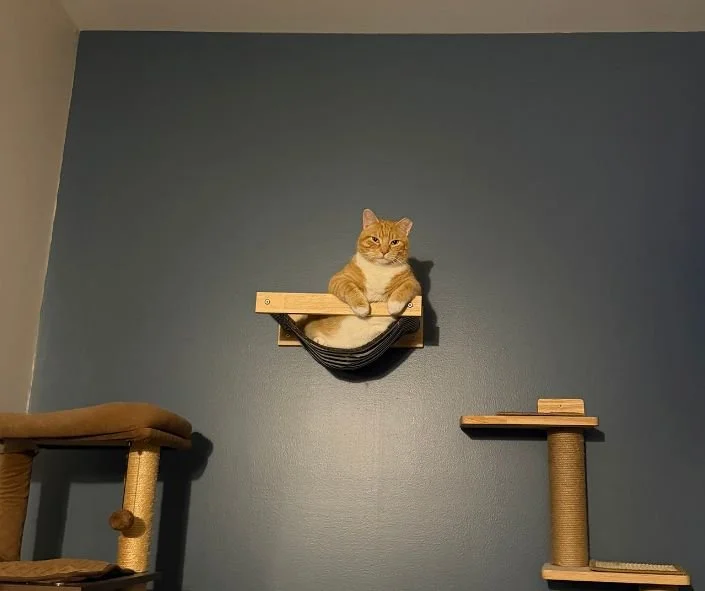
Seymour on his favorite cat hammock
Cat behavior professionals increasingly emphasize environmental enrichment as a first step before assuming a medical or behavioral disorder.
Creating additional territory for cats doesn't necessarily mean moving to a larger home.
It can mean:
Adding a cat tree.
Installing wall shelves.
Creating window perches.
Providing additional litter boxes.
Offering quiet retreat spaces.
Increasing vertical territory is particularly important because cats naturally seek elevated positions where they can observe their environment safely.
In many homes, adding upward space can dramatically change a cat's confidence level.
When Stress Signals Something More Serious
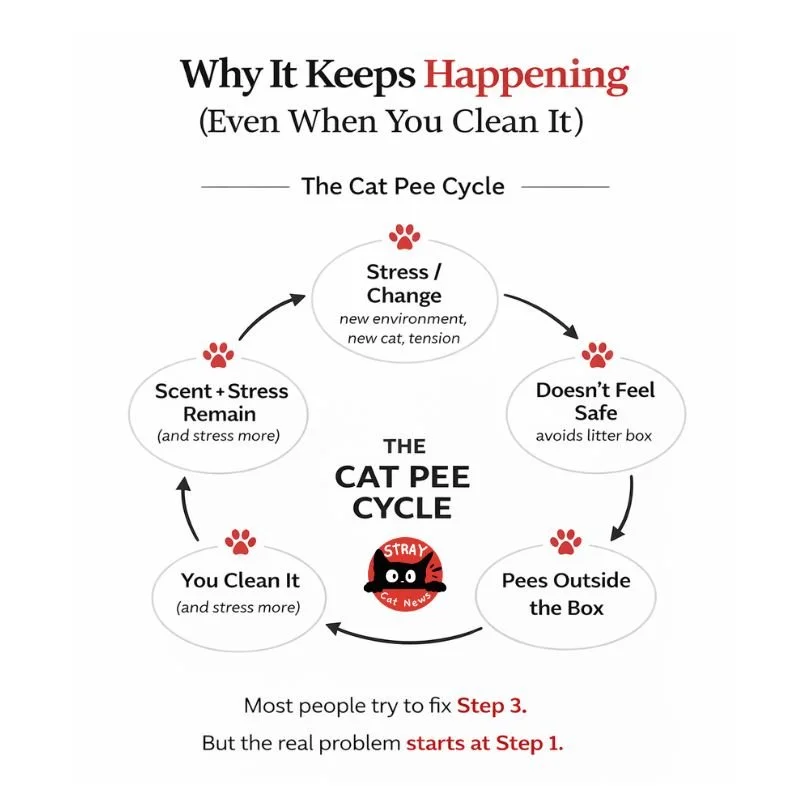
While territory-related stress in cats is common, behavioral changes should never automatically be dismissed.
Symptoms such as:
Sudden litter box avoidance
Appetite loss
Aggression
Excessive vocalization
Changes in grooming
can also indicate underlying medical conditions.
Veterinary evaluation should always be the first step when behavior changes appear suddenly.
Once medical causes are ruled out, environmental stress becomes an important area to investigate.
What Pennsylvania Rescues See Every Day
Rescue groups across Pennsylvania regularly work with cats who arrive stressed, fearful, or overwhelmed.
Many of those same cats transform once they are placed in foster homes or environments where they have access to predictable routines and adequate territory.
It's one reason foster homes, cat cafés, and enrichment-focused adopters often play such a critical role in successful placements.
Given enough space, consistency, and security, many stressed cats become completely different animals.
The Bigger Picture
If your cat is showing signs of stress, don't wait until the behavior becomes a bigger problem.
Download our free guide:
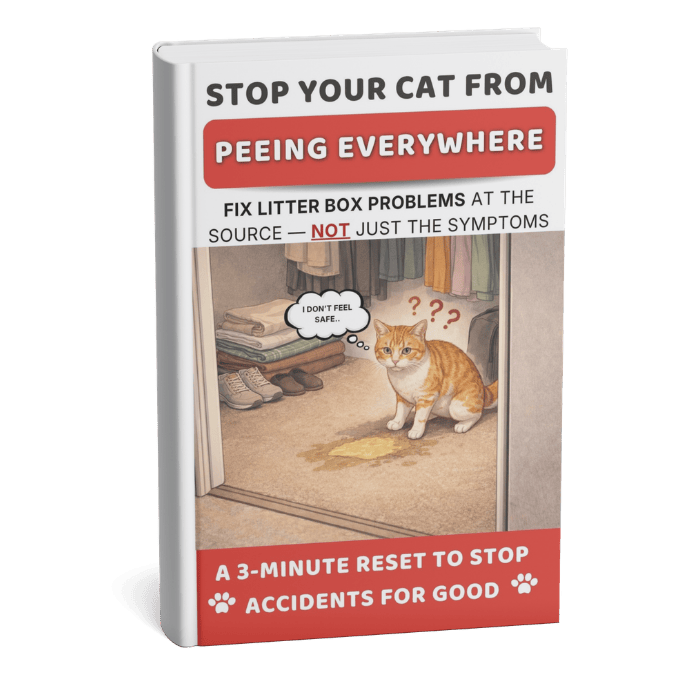
You'll learn practical territory-building strategies that help many cats feel safer, more confident, and more secure at home